Wednesday, November 30, 2016

Early Years in the PYP

Today we are reviewing the IBO Early Years documentation.

We will examine how the IB Early Years aligns with the Reggio-inspired approach.  We will analyze what things we incorporate well in our own teaching and learning and if there are things we still need to improve.

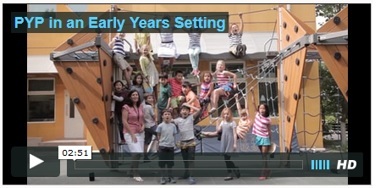
Video on IBO website:  PYP in an Early Years Setting


Booklet on IBO website:  PYP in the Early Years.


Video on OCC website:  Early Years in the PYP: Educator's Perspective

Additional link to revise in the future
Visible Thinking & ATLs (transdisciplinary skills) in Early Years

Wednesday, November 16, 2016

Documentation - Learning Stories

Today we are looking at documentation samples.

Please choose one of the following and add your comments.

What do you notice?

LINK to Documentation Samples

Notes from meeting on Wed. Nov. 16, 2016:

"Illumination"
Title, text (a few small paragraphs). Series of pictures that are referenced in the text.
Content of the text talks about the children, names, ages, what happened, what was the provocation, straight forward. Interpretation from the teacher - What is the inquiry? What did the children learn about? Why did you have that (evidence).

Analisa - Remain child center, not about what the teacher set up. Difficult to interpret
Shuruq - the teacher was involved for this specific activity (so she mentioned herself in the documentation)

"Sailing within reason"
Learning story for one specific child.
Shuruq - likes the back and forth language exchange
This would be good for seesaw (Liz- Use shadow puppet to tell the story and then upload to SeeSaw)

"Building a Doll's House"
Details
Amina- have students involved with the process- label photos? 

Not every moment is worth documenting - what is important to this specific child?
Why did we choose this to document? Are you studying it in class? Does this child do this all the time? Have they taken it further?

Try and make one learning story per a child. - Build from there..

Documentation - Learning Stories

Today we are looking at documentation samples.

Please choose one of the following and add your comments.

What do you notice?

LINK to Documentation Samples

Notes from meeting on Wed. Nov. 16, 2016:

"Illumination"
Title, text (a few small paragraphs). Series of pictures that are referenced in the text.
Content of the text talks about the children, names, ages, what happened, what was the provocation, straight forward. Interpretation from the teacher - What is the inquiry? What did the children learn about? Why did you have that (evidence).

Analisa - Remain child center, not about what the teacher set up. Difficult to interpret
Shuruq - the teacher was involved for this specific activity (so she mentioned herself in the documentation)

"Sailing within reason"
Learning story for one specific child.
Shuruq - likes the back and forth language exchange
This would be good for seesaw (Liz- Use shadow puppet to tell the story and then upload to SeeSaw)

"Building a Doll's House"
Details
Amina- have students involved with the process- label photos? 

Not every moment is worth documenting - what is important to this specific child?
Why did we choose this to document? Are you studying it in class? Does this child do this all the time? Have they taken it further?

Try and make one learning story per a child. - Build from there..

Wednesday, October 5, 2016

Cali Reflections...


The visit to Colombo and Colegio Bolivar were both very different experiences for me. One school was a mirror of where we were a year ago and the struggle we are going through as teachers now. The other school was a reflection of where we want to go and a reassurance that we are headed in the right direction. This positive reassurance was much needed after a year of hard work and self-doubt. It is just what I needed to motivate me to keep going and continue with the struggle of understanding, connecting and making sense of all I see, read and hear about in regards to a child-centered, emerging curriculum classroom. I never thought that as a teacher of twenty years, I would now be going through such a huge transformation in that way I teach, the way I see children and the way I plan and organize my classroom. This transformation has been wonderful because it really does make more sense to me than anything I was doing before and despite my training, my teaching experience and my teaching degrees.  Observing El Nido gives me the image I was missing after all the theory we have been discussing and reading about.  I hope the rest of our team feel as accomplished as I do after visiting both schools and seeing that we are not so far off!

Analisa

-------------------------------------------------------------------------------------------------------------------------

When I think about my time in Colombia this past weekend, I could elaborate in many sentences on how the El Nido is an inspiring example of the Reggio Emilia way of learning and teaching and how much I felt the magic there that I so wanted to feel. I could also name some reasons why BBC did not feel quite that way for me. Simply put, when observing classes during our time at BBC and in our conversations with the teachers and Claudia it became clear that they were in the process of figuring out how to put the Reggio philosophy into practice they knew in theory.


What I would like to reflect on is how good I felt being part of our MET EC team. We all have different personalities, backgrounds and personal lifes yet we all respect each other and like to be together. In Cali, we had fun and celebrated being a team. In many ways, I felt that we all realized that we are on the road to create a very special place together, our own El Nido here at the MET. Only collaboratively, as a supportive EC team where everyone works together, is visible and feels valued, we can go far in our Reggio journey.  During our time in Cali, I felt we took each other by the hands and walked many steps forward in the same direction. I am really looking forward to continue on our wonderful Reggio journey together.

Stephanie

---------------------------------------------------------------------------------------
Our professional development trip to Cali last week was truly a definition of the word development: the process of developing.  I really saw (and  see) myself in the middle of a process of experiencing and growing in understanding what early childhood education feels and looks like with reggio-inspiration.  I found the trip helping me to realize that expansion of teacher understanding and growth, maturation of systems (how to document, making learning visible, collaboration), and student learning is constantly evolving.  Sometimes you hit that sweet spot and sometimes not.  The whole tango of what to say and when to say it as a teacher and honoring the students' individuality in an emergent-curriculum has those "sweet-spots" that one can find, I believe, using the mantra that El Nido's atelierista Juan shared: "stop being a teacher".

I would have to say that this trip has made it evident to me that being reggio-inspired is different for each school because the dynamic of each EC team the, administrative influence and directive, and physical space and structures among many other things all trickle down to affect  student-led exploration and discovery. Observing these two different schools has made me proud of where we are given our limitations and has given me a lot of confidence in my own journey. I appreciate the chance to bond with all the EC team members outside and away from our usual routines and spaces.  It is clear that we were all lit with that spark that you can't help to feel the poetic expressions found in an early childhood space that has just got it.  Put into song, I felt kind like this: click me!

~Shuruq

------------------------------------------------------------------------------------------

If I had to describe my experience in Cali, Colombia in three words, I would say it was eye-opening, inspiring and meaningful. I am so grateful for the amazing opportunity that was given to us and for all the knowledge I gained and the things I learned from this experience. At first, I was very intrigued to see how the Reggio Emilia approach could be implemented in different schools, and during our visits, I was amazed to see how different school had their own vibe, their own characteristics. As we know, no schools can’t totally  be ‘’Reggio Emilia’’ but they can be ‘’reggio inspired’’. Through this experienced, I also got a better understanding that when we include this approach to our classroom, we let the children search out the knowledge through their own investigations and the importance of letting them be driven by their interests to understand and know more because as we know, children are capable of constructing their own learning.

It was truly interesting to learn that those teachers went (and some still are) through the process of implementing the approach in the classroom and having the same struggles but knowing that at the end, every single struggles going to be worth it, not only for the children but for the teachers as well. In my opinion, even though we are in the early stages of implementing the approach, we can already see the difference and how it greatly affects the children in the most amazing way. We can see how much they learn through play and the enthusiasm they show when they are learning something that they truly care about and not something that ‘’must learn from the book’’.


As I mentioned previously, I believe this experience was truly inspiring. We returned with many ideas and excitement to share them with others and implement them in our class. One of the things that really stuck in my mind from our trip was the forever remembered quote from Juan, the Movement/ Atelierista from ‘’El Nido’’ in Colegio Bolivar: ‘’Stop being a teacher’’. Those words really had an impact on me and I think we all need to keep that in mind, no matter how hard can be sometimes, we truly need to step back and let the children inquire. 

Andreina


Friday, September 30, 2016

Sep. 29, 2016 Visit to El Nido, Colegio Bolivar, Cali

Our lovely hosts:  El Nido, Colegio Bolivar in Cali, Colombia - a Reggio-Inspiration!
History of the program:  Ten years old.  A house transformed.


Question & Answer PM Session:
I noticed the therapist taking notes, and the teachers were both busy with students sometimes also taking photos, but when do you take written notes, fill checklists, other documentation.
Teachers complement each other and based on observation when children leave we sit down and process our observations about students.  It is listening and observing.  When it is academic and we want to use a developmental continuum checklist.  We choose the moments when we document to record words and comments by children.  We design experiences and then decide who will record and who will be facilitating experience.  Sometimes we also use videos to capture what we are looking for.

Eg.  Use CA Dept Education Developmental Continuum.  This year looking at Math standards - benchmarks.  Then collect records of examples.

Video clip:
Exploring Math Standards - looking for evidence of mathematical understanding of classification.
Level 1.  This is how we thought students begin to learn to organize objects - this is not the continuum.  So we defined it for ourselves.  Here are the videos to show the levels.  Next Level - sorting shoes - based on one attribute - by color dinosaurs into colored egg cartons.  Next Level 3.  Organizing objects into groups with based on functional attribute - insects with wings or not in sandbox (dialog guided by teacher) - spoon colors at snack time.  Next Level - two groups.  Plastic bottles, tall, short, tall and fat, clear, and green - sorting activity in which student answers questions to develop language expression for his classification system (Vygotsky - language furthers cognitive development).

Planning:
XXX

Weekly planning -
Provocation planning document:
date:
place:
time:
What you wish to document:
Reflections about experience:
Photo documentation of process:

Parental communication:
Agenda
Newsletter (once every two months) - electronic
Narrative Report Cards (3)

Planning each week in grade level teams or by teacher class team.  Suggest that each week teachers plan by class teams to reflect the interests and needs of each student class group.  For broader common objectives have decided on how we design and facilitate to collect evidence and extend growth for all students and report on.  Every Wednesday El Nido teachers meet to PLCs - next time we meet we will look at classification examples and see how they match our continuum - exemplars at each level.

Language development?  How go deeper without using child's home language.
Goes back to use of 100 Languages.  Also constant dialog with other teachers to support and deepen learning.

Eg.  Sharks was spontaneous project initiation (often Wolf character in other years).  Shark has become part of group, now make food for shark, sometimes it chases us, all kinds of
Todo juego es una metafora de la vida....

How do you work around shifting interests of students?
The way that we teachers transform and create learning experience, enrich their ideas with every element you have, you invite all students to participate.  They are all motivate to join because of the inspiration you infuse.  It is never just the interests of the children, also our own interests.  Children are magnificent in taking apart our ideas.  We don't know where it is going.

Share of project:  Una Ciudad para Jugar. - A City for Play.
Trip to city to visit and explore places, looking for places to play and other places in the city.
Back at school, interpret home experiences at school.
Transpose onto city places photos pictures of 'play places' they created to enhance the city.
The open-mindedness of teachers allows for a project like this to go in a direction that continues the whole year.

Looks easy, but requires lots of thinking, reflection, and dialog.

Our inspirations - Shark theme of things we ate up here -
Shuruq:  Dialog between all of the teachers.
Liz:  How comfortable the students are.  The calmness and security.
Analisa:  Stop being a teacher.
Stephanie:  How will I feel?  Like magic!  In every room the way you received us the way you receive children and absorb them into this magical world.
Andriena:  How the teachers guided children in the store activity.
Monika:  Opened my eyes on ways to work with my assistant.


Sep. 28, 2016 Visit to Colegio Colombo Britannico, Cali

Wednesday, September 21, 2016

Documentation Analysis


Daily Schedule

"Documentation is not about what we do, but about what we                                   are searching for."     -Carla Rinaldi


Documentation is displayed or easily accessible to teachers, children and families to:

  • provide a record of the learning process
  • reveal connections between events
  • review past experiences
  • plan future experiences
  • make learning visible to children and families
  • honor children's words
  • honor children's families

Through documentation and display, children see their own images and ideas having an impact on the physical space around them and on others.

Three Elements of the Documentation Process (article).


Agreements are school-wide and align with the PYP.  'This is not a display.  It is interactive.  Kids are involved in making it and using it.  They take responsibility."


I like the metaphor tied to a plant, they are growing, their families grow.  It comes together nicely.  Will help us with connections to out units of how plants grow.


Teacher observation comments.  Seems to be documenting a lot.  Nice visual we might be missing observations of certain students.


Interactive with pictures.


Nice background.  It validates the kids and play, and exploration.  Adding interpretation and documenting the process....could use more box pictures to create a 'What to do with a box' book.


Describes the activity, what the kids were saying, the connections and developing our community.  Is this connected to mirror on door?  Yes, to have people from outside our classroom to look at themselves with a friend and compare - find connections.


Documenting learning about the everyday.  'Here are the Dolphins.'

Tips and Tricks for keeping on top of your pictures and documentation:
Create folder on desktop and keep adding the relevant ones.


Wednesday, September 7, 2016

Looking for Documentation...

In order to get us started at looking at our documentation we split into groups and found evidence of documentation within and around our EC classrooms.  Each team of three looked through the rooms and hallways, and then decided to focus on two specific pieces of documentation they found.  The teams then discussed their interpretations of the documentation and questions the documentation provoked.  We then met back as a whole group to listen to the feedback and questions.
Here are the welcome boards from the start of the school year.


Friday, September 2, 2016

Reflections about Back to School Night - Open House


As a team we met to discuss how our Back to School Night went.  We went over some of the questions parents had for us, and our own reflections.


Reflections about Back to School Night: (2 stars & 1 wish)
Things that went well:
The observation around the room.  Parents were even looking under tables.  Going over the transdisciplinary skills having them try to match the skills with what is happening in the photos we showed of the students engaged in inquiry (brilliant idea Analisa!).  Thanks to Shuruq for the lovely transdisplinary skills display.  The flow of the presentation, the activities.  The involvement in the activity so that it wasn't only me talking.  They were interested in the 'small world area.'  Parents were asking how these things were going to be assessed, but they seemed to answer their own questions as they went along.  Parents got an idea about what their kids were learning by walking around observing and then discussing them.  Going over the blog was helpful and made it easy to have the tabs there.  Getting together as a group to plan presentation as a jumping off point, and having done that in advance gave me time to do the presentation organically but knowing the parts I wanted to get done.  Mosaic of hands activity - gave time to wait for parents, find the photo of your child's hands.

Things that left us wondering or wish to change:
Wish we had all the parents together at the same time or more evenly divided.  Could we maybe do it after school?  Parents asked where their child's learning was going to be at the end of the year.

Wonderings:
What to do if the child goes to the construction center every day? (Doesn't do fine motor?)
Would like to learn more about discipline and working with special needs?
If learning expectation in T1 is 1-5, what happens if they are not in an area where they count things?
How can we help kids be involved in other centers, so they can develop their skills?

Parent Questions:
One parent was confused about why they don't have assigned seats.
My child likes to have her own things, how does it work if everything is shared?
Do you help them learn manners?
Wood table - what kind of learning tools?  What do they do with all the accessories?  What do they use the house for?
What part of the room do they use the most?
How much time do they spend outdoors?
Should we have the same sorting system at home for art supplies?
Is there a type of punishment, how you discipline children?
How do the children manage time and know what is next?  What does this inquiry mean?

Sharing is fundamental to everything we do when we learn.  Kids have things to take responsibility for but sharing things develops their executive functioning skills, fostering community - social cooperative skills.  Taking turns.
The children are everywhere all the time, but the teepee is a place where most kids like to go.  Using observation to inform practice of how to design classroom environment to invite all students to participating in learning within those areas.  Keeping records of where kids go, with whom, how long, what they do is essential for us to really develop all learning areas in our classroom.
The challenge is to design activities in each area where all skills are developed, and also be creative in our design of spaces and activities to draw them out.  For example, integrate blocks or trains in other areas of the room, Batman cut outs.
Positive discipline in the classroom is emotion coaching.  Labeling the feelings, Addressing the behavior, Problem Solve together. (Role play can also be helpful to reinforce).
Keep in mind Stephanie's Peace Dove on your shoulder - don't let it fly away.
'Rain is what makes children grow, not thunder!" - wise words of wisdom from Shuruq.


Tuesday, May 31, 2016

Our Learning about Reggio-Inspired Education

We have come a long way since the beginning of the school year with our learning as a group about Reggio-inspired education.  Read about the fundamental principles of Reggio-inspired teaching and learning, and Reggio as it fits with the PYP framework.

The Reggio Emilia Approach emphasizes hands-on discovery learning that allows each child to use all their senses and all their languages to learn.


Today we will be using a visible thinking routine to reflect about our learning and questions we continue to wonder about and wish to continue to explore.

Insert Photo Thinking Routine
Questions


  REGGIO CHILDREN

The Reggio Emilia philosophy is an approach to teaching, learning and advocacy for children. In its most basic form, it is a way of observing what children know, are curious about and what challenges them. Teachers record these observations to reflect on developmentally appropriate ways to help children expand their academic and social potentials. Long term projects connect core academic areas in and out of the classroom.

Image of the Child

Children are viewed as competent, curious, full of knowledge, potential, and interested in connecting to the world around them. Teachers are deeply aware of children’s potentials and construct all of their work and environment of the children’s experience to respond appropriately.

Collaboration and Interaction

Collaboration and cooperation are intentional in a school inspired by the Reggio Emilia approach to education. The entire system is designed to be connected and in relationship. Nothing is left to sit in isolation. Everything is alive and connected. Children, teachers and families join together to continually improve the system that supports our school community.

The Environment

The space within the school or the environment is considered the third teacher. Teachers intentionally organize, support and plan for various spaces for children. The daily schedules are planned to ensure that there is a balance between individual, small and large group activities, child directed and teacher initiated activity and inside as well as outside experiences.

The Three Subjects of Education: Children, Families and Teachers

For children to learn, their well-being has to be guaranteed; such well-being is connected with the well being of parents and teachers. Children, parents and teachers have rights; the right to safety, care and welfare, the right to be involved and the right to grow professionally.

The Power of Documentation

Documentation is a means to collect information, observations and learning. It can be in the form of observations, photography, video, conversation transcripts and/or visual mediums like paint, wire, clay or drawing materials. Teachers use documentation to identify strengths, ideas, and next steps to support learning.

Emergent Curriculum

Emergent Curriculum is a way of teaching and learning that requires teachers to observe and listen to the children. Teachers ask questions and listen for the children’s ideas, hypotheses and theories. After observing children in action, the teachers compare, discuss, and interpret their observations. Teachers plan activities, studies and long term projects in the classroom based on their observations. Teachers partner with children and the exchange of theories are referred to as the Cycle of Inquiry. Teachers use their interpretations, intentions and goals (social, emotional and academic) to make choices that they share with children. Learning is seen not as a linear process but as a spiraling progression.

The Hundred Languages of Children

The Studio teacher (or Atelierista) works closely with other teachers and the children through the Studio, an intentional space containing materials and tools to pursue thinking and concepts. In addition to the larger Studio, Mini-studios are found in every Discovery. What is done with the materials is not art per se, because in the view of Reggio educators the children’s use of media is not a separate part of the curriculum but an integral part of the whole cognitive symbolic expression process of learning.

The Role of the Teacher

The image of the child shapes the role of the teacher and involves four major components. Teachers are:
  • Co-constructors: partners, guides, nurtures, solves problems, learns, hypothesizes
  • Researchers: learns, observes, revisits
  • Documenters: listens, records, displays, revisits
  • Advocates for children: involved in the community, politics relating to children, speaks for children and presents work to other educators and community members.

The Role of Parents

Parents are an essential component of the school. They are an active part of their children’s learning experiences and help to ensure the welfare of all the children in the school. 

The Role of Time and the Importance of Continuity

Time is influenced by the interests and activities that the children bring to life within the school. This in turn impacts schedules, groupings and routines. Teachers get to know children (strengths, needs and personality) because children stay with the same teacher and the same peer group for two years.

Projects

Projects provide the backbone of the children’s and teachers’ learning experiences. They are based on the strong convictions that learning by doing is of great importance and that to discuss in group and to revisit ideas and experiences is the premier way of learning. Project ideas come from experiences of the children and teachers, a chance event or problem posed. They can last from a few days to several months.

____________________________________

Fundamental Principles

Children are capable of constructing their own learning

They are driven by their interests to understand and know more.

Children form an understanding of themselves and their place in the world through their interactions with others

There is a strong focus on social collaboration, working in groups, where each child is an equal participant, having their thoughts and questions valued. The adult is not the giver of knowledge. Children search out the knowledge through their own investigations.

Children are communicators

Communication is a process, a way of discovering things, asking questions, using language as play. Playing with sounds and rhythm and rhyme; delighting in the process of communicating.
Children are encouraged to use language to investigate and explore, to reflect on their experiences. They are listened to with respect, believing that their questions and observations are an opportunity to learn and search together. It is a process; a continual process. A collaborative process. Rather than the child asking a question and the adult offering the answers, the search is undertaken together.

The environment is the third teacher

The environment is recognised for its potential to inspire children. An environment filled with natural light, order and beauty. Open spaces free from clutter, where every material is considered for its purpose, every corner is ever-evolving to encourage children to delve deeper and deeper into their interests.
The space encourages collaboration, communication and exploration. The space respects children as capable by providing them with authentic materials & tools. The space is cared for by the children and the adults.

The adult is a mentor and guide

Our role as adults is to observe (our) children, listen to their questions and their stories, find what interests them and then provide them with opportunities to explore these interests further.
The Reggio Emilia Approach takes a child-led project approach. The projects aren’t planned in advanced, they emerge based on the child’s interests.

An emphasis on documenting children’s thoughts 

You’ll notice in Reggio and Reggio-inspired settings that there is an emphasis on carefully displaying and documenting children’s thoughts and progression of thinking; making their thoughts visible in many different ways: photographs, transcripts of children’s thoughts and explanations, visual representations (drawings, sculptures etc.), all designed to show the child’s learning process.

The Hundred Languages of Children

Probably the most well-known aspect of the Reggio Emilia Approach. The belief that children use many many different ways to show their understanding and express their thoughts and creativity.
A hundred different ways of thinking, of discovering, of learning. Through drawing and sculpting, through dance and movement, through painting and pretend play, through modelling and music, and that each one of these Hundred Languages must be valued and nurtured.
These languages, or ways of learning, are all a part of the child. Learning and play are not separated.
The Reggio Emilia Approach emphasizes hands-on discovery learning that allows the child to use all their senses and all their languages to learn.

                         _______________________________________________
                                                        PYP Early Years


Research article
In full: PYP Early Years Final Report

Staff at all four of the sites stated that they saw their programmes as aligned with the principles of the Reggio Emilia approach. The reflective, inquiry based approach to teaching and learning that is the basis of the PYP programme is also in line with the Reggio Emilia approach. Researchers observed numerous examples of such approaches in the written, taught and assessed curriculum in the programmes of S1, A1 and A2. The extensive documentation as part of the planning, implementation and evaluation processes of these three programmes, and the view of the child as an active learner, with respect for IB Early Years Project Final Report (April, 2014). Morrissey, Rouse, Doig, Chao & Moss (Deakin University) 35 children’s thinking and ideas, could also be seen as reflective of the Reggio Emilia approach within these three programmes. The S1 and A1 programmes appeared particularly strongly influenced by Reggio Emilia, especially apparent in the design and/or layout of their builidings, and in their emphasis on expression through the arts, and a sense of aesthetics and beauty in their programmes. Photographs of these sites show, for example: carefully arranged displays of children’s papier mache heads, with a quote from Malaguzzi about the 100 languages of children (S1) (Photos 4 & 5); a Library decorated with beautiful objects (S1) (Photo 6); a display of branches of blossom as an inspiration at an art table that mirrors the blossom trees in a courtyard outside; (Photo 7); carefully arranged displays of children’s artwork in a piazza area (A1) (Photo 8)

The learning environment, both indoors and outdoors, is regarded as a crucial factor in children’s learning, both in the PYP Early Years curriculum (IBO, 2013) and in the Reggio Emilia approach (Millikan, 2003). The learning environment refers not just to the physical space and resouces, but also less tangible elements such as the social and emotional climate (Curtis & Carter, 2003). The learning environment can be regarded as reflecting a programme’s philosophy, values and pedagogical approaches. Observation of a learning envrionment can reveal for example how much children are given choice and responsibility in the set up of a space, or the choice of resources or equipment. It can reveal whether the outdoors and the natural world are regarded as places where learning occurs. A learning envrionment will reflect whether, for example, sustainability or a sense of aesthetics and beauty, or play-based learning are valued in the programme.